For many people with disabilities, having access to meaningful activities and community involvement is just as important as receiving support with daily living. This is where NDIS Day Programs come in. They provide structured opportunities for learning, connection, and personal growth, giving participants the chance to build skills and be part of their community in a safe and supportive way.
What Is an NDIS Day Program?
An NDIS Day Program is a structured set of activities offered during the day to support people with disability in reaching their personal goals. These programs usually run in group settings, but may also include individualised activities depending on the participant’s needs.
Day Programs are not about “filling time.” Instead, they are designed to help people develop independence, explore interests, and connect with others in a supportive environment.
Types of Activities in Day Programs
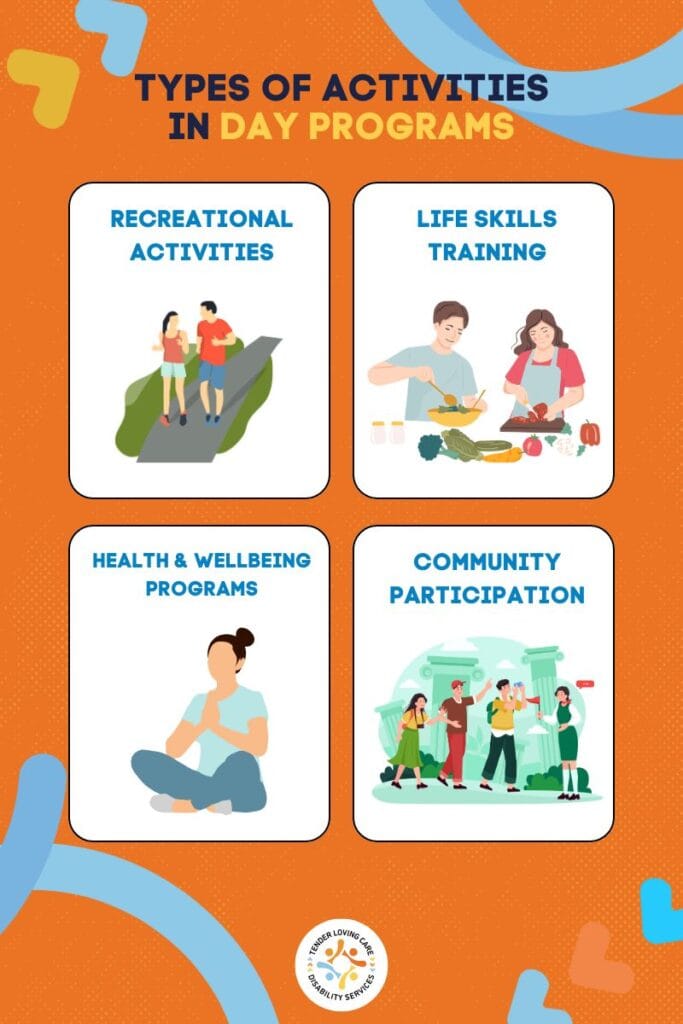
Day Programs vary widely depending on the provider and the needs of participants. Activities may focus on social, recreational, educational, or skill-building outcomes. Examples include:
- Recreational activities: art, music, sports, gardening, and outings to local events.
- Life skills training: cooking, budgeting, shopping, and using public transport.
- Health and wellbeing programs: fitness, nutrition workshops, or relaxation sessions.
- Community participation: volunteering, group excursions, or engaging in community projects.
These activities are not only enjoyable but also provide practical learning opportunities.
Who Can Access Day Programs?
Day Programs are available to people who are funded under the National Disability Insurance Scheme (NDIS). Eligibility is usually based on whether the program aligns with the goals set out in a participant’s NDIS plan.
Common groups who access Day Programs include:
- Young people with disabilities who have recently finished school.
- Adults who want to develop more independence in daily life.
- People seeking structured social opportunities to reduce isolation.
Participation is flexible, and individuals can attend on a full-time, part-time, or selected day basis that suits their schedule and support needs.
How Are NDIS Day Programs Funded?
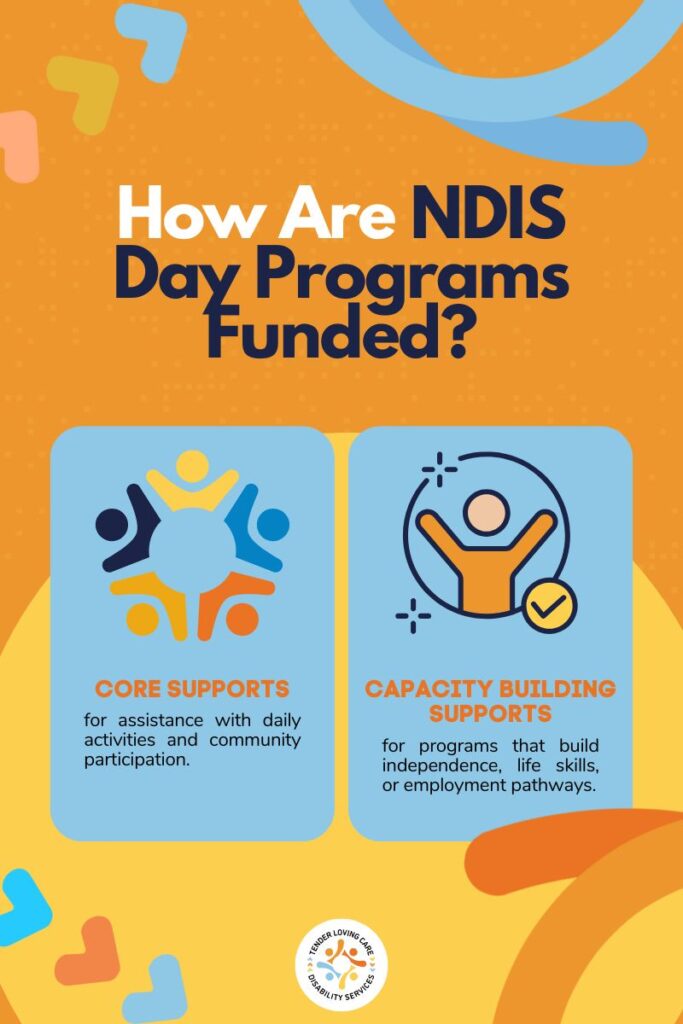
Funding for Day Programs generally comes from a participant’s NDIS plan. Depending on individual goals and supports, this may be funded through:
- Core Supports: for assistance with daily activities and community participation.
- Capacity Building Supports: for programs that build independence, life skills, or employment pathways.
Participants and their families can work with their support coordinator or planner to determine which budget areas apply to their chosen Day Program.
Benefits of Day Programs
Day Programs offer more than just structured activities. They can play a significant role in improving the quality of life by:
- Encouraging social connections and friendships.
- Providing routine and structure to the week.
- Supporting the development of practical skills for everyday living.
- Promoting confidence and independence.
- Giving families and carers peace of mind that their loved one is engaged and supported.
Why NDIS Day Programs Matter for Independence and Inclusion
NDIS Day Programs are more than a service — they are an opportunity for people with disabilities to explore their interests, contribute to their communities, and build independence in ways that are meaningful to them. By creating spaces where skills, friendships, and confidence can grow, these programs help participants live fuller, more connected lives.